A Refined, Strategic Process for High-Stakes Property Insurance Claims
When a significant property loss occurs, the claim process becomes more than paperwork. It becomes a matter of documentation, valuation, policy interpretation, and disciplined representation. Iron Reef guides policyholders through each phase with precision, professionalism, and a commitment to pursuing a fair and fully supported outcome.

Policyholder Duties After Loss
Most property insurance policies contain provisions commonly referred to as Duties After Loss. These policy conditions define what the insured must do following a hurricane, fire, water intrusion event, structural failure, or other covered damage. Proper compliance is important. In many claims, timing, preservation of evidence, and the quality of documentation can directly affect how the claim is evaluated.
While every policy is unique, insurers commonly expect prompt notice, reasonable efforts to protect the property from further damage, cooperation with inspections, and the production of supporting records. Iron Reef helps policyholders navigate these obligations with structure and clarity so the claim is positioned from the outset with strength and credibility.
Core Duties Following a Covered Loss
A sophisticated claims process starts with disciplined compliance. The sections below outline common post-loss obligations and how Iron Reef supports policyholders at each stage.

Prompt Notice of the Loss
Policyholders are generally expected to notify the insurance carrier within a reasonable time after discovering the damage. Prompt reporting allows the insurer to begin its investigation and helps preserve key facts, site conditions, and evidence related to causation and scope.
Iron Reef assists with the reporting process, helps frame the loss clearly, and works to ensure the claim begins with organized, policy-conscious documentation.

Protecting the Property from Further Damage
Most policies require the insured to take reasonable steps to prevent the loss from getting worse. This may include roof tarping, board-up work, shutting off water, moisture mitigation, temporary drying, or other emergency stabilization measures.
These efforts not only protect the property, but also demonstrate good-faith compliance with policy conditions and help maintain the integrity of the claim.
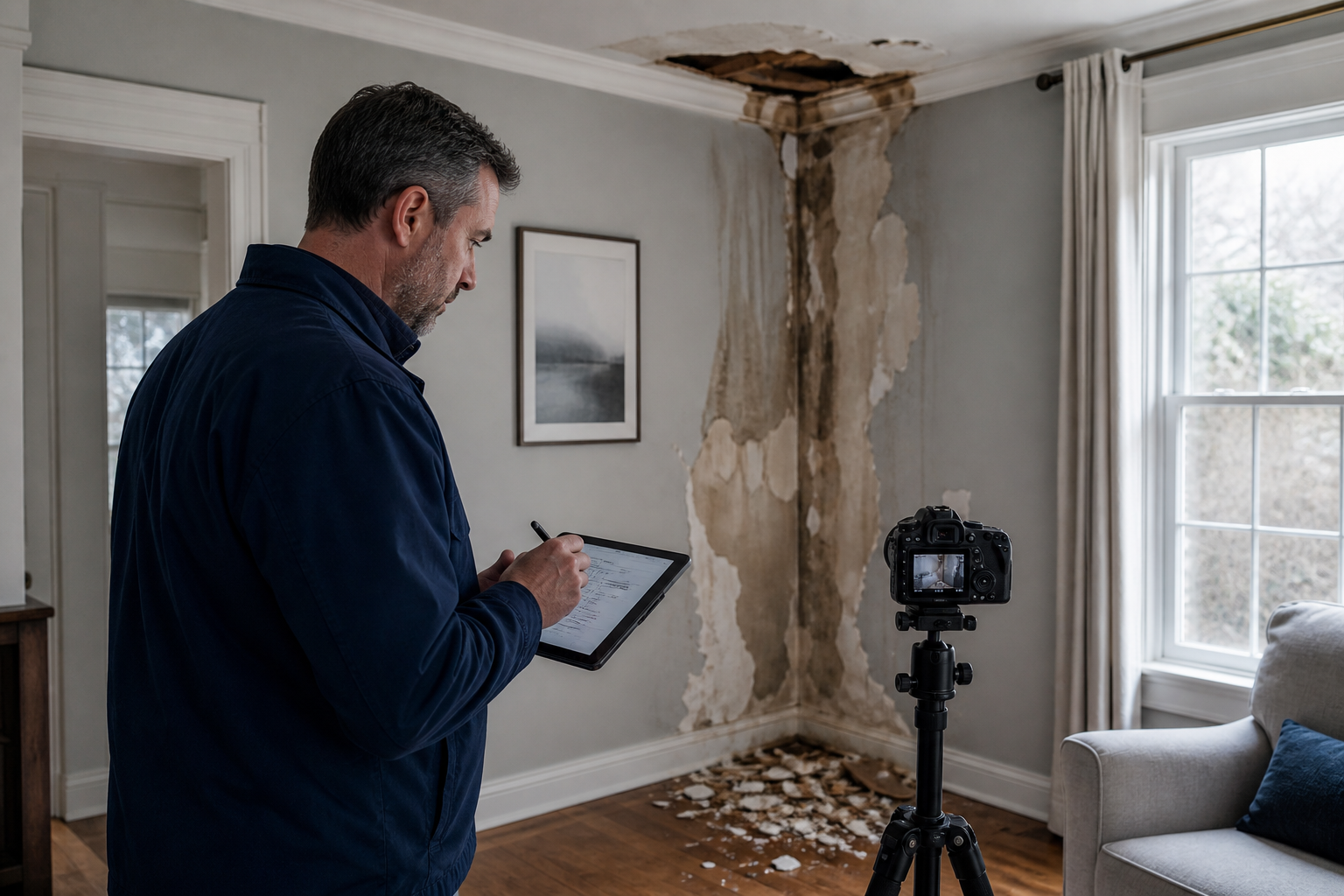
Documenting the Damage
Thorough documentation is often one of the most decisive elements in a property claim. Photographs, video, emergency invoices, contractor input, content inventories, and repair records can all help establish the nature and extent of the loss.
Iron Reef conducts detailed inspections and develops organized, supportable claim files designed to present the loss with clarity and credibility.

Allowing the Insurance Company to Inspect
Carriers are entitled to inspect damaged property during their investigation. These inspections may involve field adjusters, engineers, consultants, or other retained professionals evaluating cause, condition, pricing, and scope.
When Iron Reef is retained, we coordinate the process, attend inspections when appropriate, and work to ensure relevant damage is properly identified and fairly discussed.

Providing Requested Documentation
During the claim investigation, insurers may request repair estimates, photographs, receipts, invoices, proof of ownership, emergency mitigation records, and other supporting materials. The quality and organization of these submissions can directly affect the efficiency and strength of the claim process.
Iron Reef helps policyholders assemble, structure, and submit supporting information in a way that promotes clarity, responsiveness, and policy compliance.
When Should You Hire a Public Adjuster?
Not every claim is simple. Significant losses often involve complex repair scopes, policy interpretation issues, competing valuations, causation questions, and communication challenges with the carrier. In these situations, professional representation can materially improve how the loss is documented and presented.
A public adjuster represents the policyholder, not the insurance company. Iron Reef’s role is to help ensure the claim is thoroughly supported, strategically positioned, and professionally managed.
The Damage Is Significant
Large losses may involve multiple systems, hidden damage, structural concerns, and substantial repair pricing.
The Estimate Appears Too Low
Carrier estimates may omit items, understate scope, or fail to account for pricing realities and code-related issues.
The Claim Is Complicated
Hurricane, fire, water intrusion, business, and structural claims often demand technical analysis and disciplined presentation.
The Claim Is Delayed or Disputed
When there is resistance, delay, or disagreement, professional advocacy can help create momentum and structure.
Experienced Representation. Structured Execution. Strategic Claim Advocacy.
Iron Reef Claims Consultants was built around the belief that policyholders deserve sophisticated, knowledgeable guidance when navigating complex property insurance claims. Our work draws on construction knowledge, damage evaluation, claim analysis, documentation strategy, and disciplined negotiation.
Whether the loss involves storm damage, fire, water intrusion, or structural issues, our objective is to help clients pursue a fair and properly supported settlement under the terms of the policy.

Understanding Appraisal
Many property insurance policies include an appraisal provision. Appraisal is commonly used when the insurer and the policyholder disagree on the amount of loss. It is not typically a determination of coverage itself, but rather a structured mechanism for resolving valuation disputes involving scope, pricing, or the amount owed.
Each Side Selects an Appraiser
The policyholder selects one appraiser and the insurance company selects another.
The Appraisers Evaluate the Loss
They review the damage, estimates, documentation, and valuation positions.
An Umpire May Be Selected
If disagreement remains, an umpire may be chosen to help resolve the dispute.
A Binding Amount of Loss Is Reached
Subject to policy language, agreement by the required participants can establish the appraisal award.
How Iron Reef Supports the Appraisal Process
Iron Reef helps policyholders prepare for appraisal by developing detailed damage assessments, organizing supporting records, refining valuation strategy, and clarifying the scope of loss. In complex disputes, disciplined preparation is often what separates a vague claim position from a compelling one.
Our role is to help ensure the loss is presented with strength, logic, and documentation so the policyholder enters the appraisal process with a clear and well-supported position.